Why Veganism is important? How it helps us to live a sustainable life and helps environment
Eating a vegan diet could be the “single biggest way” to reduce your environmental impact on earth, a new study suggests. Researchers at the University of Oxford found that cutting meat and dairy products from your diet could reduce an individual's carbon footprint from food by up to 73 per cent. If everyone stopped eating these foods, they found that global farmland use could be reduced by 75 per cent, an area equivalent to the size of the US, China, Australia and the EU combined.
Not only would this result in a significant drop in greenhouse gas emissions, it would also free up wild land lost to agriculture, one of the primary causes for mass wildlife extinction. The new study, published in the journal science, is one of the most comprehensive analyses to date, looking into the detrimental effects farming can have on the environment and included data on nearly 40,000 farms in 119 countries.
The findings reveal that meat and dairy production is responsible for 60 per cent of agriculture’s greenhouse gas emissions, while the products themselves providing just 18 per cent of calories and 37 per cent of protein levels around the world. Researchers examined a total of 40 agricultural products in the study, covering 90 per cent of all food that is eaten. They looked at how each of these impacted the environment by analyzing climate change emissions, water pollution and air pollution.
Lead author Joseph Poore said: “A vegan diet is probably the single biggest way to reduce your impact on planet Earth, not just greenhouse gases, but global acidification, eutrophication, land use and water use." It is far bigger than cutting down on your flights or buying an electric car,” he explained, which would only reduce greenhouse gas emissions. “Avoiding consumption of animal products delivers far better environmental benefits than trying to purchase sustainable meat and dairy,” he added. The research also looked into the different techniques used to produce the same foods and found vast distinctions in terms of environmental impacts.
For example, beef cattle reared on natural pastures used 50 times less land than those raised on deforested land. The latter can leads to up to 12 times more greenhouse gas emissions by comparison. This starkly contrasts with emissions of greenhouse gases released as a result of plant-based protein production for items such as tofu and peas.
Poore also explained that even production methods which are thought of as sustainable, such as freshwater fish farming and grass-fed beef, can pose environmental problems. “Converting grass into [meat] is like converting coal to energy. It comes with an immense cost in emissions,” he told The Guardian.
Poore’s research is the result of a five-year-long project, which initially began as an investigation into sustainable meat and dairy production. He stopped eating animal products altogether himself after the first year. The next step, Poore told The Independent, is to find ways to test his proposed approach in practice.
"The problem is, you can’t just put environmental labels on a handful of foods and look to see if there is some effect on purchasing," he said. "Consumers take time to become aware of things, and then even more to act on them. Furthermore, the labels probably need to be in combination with taxes and subsidies. My view is that communicating information to consumers could tip the entire food system towards sustainability and accountability."
Veganism combats world hunger
A lot of the food that's grown in the world isn't being eaten by humans. In fact, 70% of the grain grown in the US feeds livestock, and, globally, 83% of farmland is set aside to raise animals.
It's estimated that 700 million tons of food that could be consumed by humans goes to livestock each year.
While meat is more calorically dense than plants, more aggregate calories (and more diverse nutrient profiles) could be produced if that land was dedicated to various plants.

Plus, all the deforestation, overfishing and pollution caused by meat and fish industries limits the overall capacity of the Earth to produce food.
If more farmland was used to grow crops for humans, then more people could be fed at less of an expense to the planet.
This understanding is becoming more urgent as the global population is expected to hit or surpass 9.1 billion by 2050. There's simply not enough land on the planet to raise enough meat to feed everyone the average American diet. Nor can Earth cope with the pollution this would cause.
It conserves water
Hundreds of millions of people around the world don't have access to clean water. Many more people struggle with periodic water scarcity, sometimes because of drought and sometimes because of mismanagement of water sources.
Livestock guzzle more fresh water than just about anything else. They're also one of the biggest polluters of fresh water.

The more livestock the world replaces with plants, the more water there will be to go around.
It takes 100 to 200 times more water to raise a pound of beef than it does to raise a pound of plant foods. As my colleague Meghan recently noted, "Cutting down on just one kilo of beef saves 15,000 litres of water. And replacing a roast chicken with a hearty veggie chili or bean stew (which has similar protein levels) saves 4,325 litres of water."
It cleans the soil
Similar to how livestock pollute water, they also erode and weaken soil. This is partly because raising livestock usually leads to deforestation, which clears huge swaths of land of the different elements (such as trees) that provide nutrients and resilience, to make room for the livestock to roam.
The world loses roughly the size of Panama each year to deforestation, which also accelerates climate change (trees store carbon)
Raising a diversity of plants, instead, nourishes soil and leads to long-term resilience.
A vegan diet reduces energy consumption
Raising livestock costs a lot of energy. This is due to a wide range of factors including: it takes a long time to raise animals; they consume a lot of food that was cultivated on land that could have been put to other use; meat products need to be shipped and refrigerated; and meat takes a long time to process from slaughterhouse to kitchen table.

Plant-based proteins, meanwhile, can be raised with 8 times less energy costs than meat-based proteins.
It even purifies the air
All the livestock in the world cause more air pollution than all the cars, buses, planes, ships and other modes of transportation in the world combined.
Plants clean the air.

A vegan diet will make you more healthy
All the nutrients you need--and probably don’t get enough of--are provided by a vegan diet. Fresh vegetables, fruits and other vegan staples are teeming with nutrients that meat just doesn’t provide.
You can get all the protein you need from peanut butter, quinoa, lentils, beans, and much, much more.
The World Health Organization just released a report further outlining the increased risks of colorectal cancer from regular red meat and processed meat consumption. This is on top of existing concerns about heart disease, stroke, and other health complications.
A lot of people have diets that are extraordinarily high in processed food that contain added sugar, preservatives, chemicals, and other ingredients that can impede your health, make you feel sluggish on a daily basis, and lead to long-term health problems. A lot of the time, meat is at the center of this diet.
Of course, vegans can have a highly processed, unhealthy diet. But going vegan forces you to actively consider the ingredients of the foods you are consuming. This daily consideration will most likely, over time, lead to a fresher, more nutrient-rich diet.
It’s really amazing how much better you feel when you eat healthy. Try it if you don’t believe me.
It’s delicious and not as hard as you think
The most common critique I’ve heard leveled against veganism is that it forces you to retire your taste buds and your free time: because meat is superior in taste and is easier to make.
While taste is subjective and a lot of people “need” their chicken wings on Sunday, I’d argue that the aversion to veganism is based more on cultural education than on actual comparisons.
Vegetables are delicious. They’re flavorful when cooked properly. Fruits are delicious. Walnuts, almonds, cashews, peanuts: delicious. Quinoa: delicious. Nearly all the foods in a vegan diet are super delicious and recipes are very easy to find.
It’s fun and can make you a better cook
I think everyone is guilty of some lazy cooking every now and then. And most people hit up take-out once or twice a week after a long day at work or school.
Vegetables can be a bit intimidating. There’s so many of them. A lot of them have to be prepared just right. And a lot of people (myself included) didn’t grow up in environments that appreciated this (my family relied on boiling frozen vegetables).
But learning about how to access the full flavor and nutrients of a vegetable is fun and rewarding.
You’ll learn a lot about the methods of cooking when you have a counter full of vegetables in front of you.
It’s more ethical
Come on. Animals deserve a dignified life. They’re intelligent, gentle creatures.
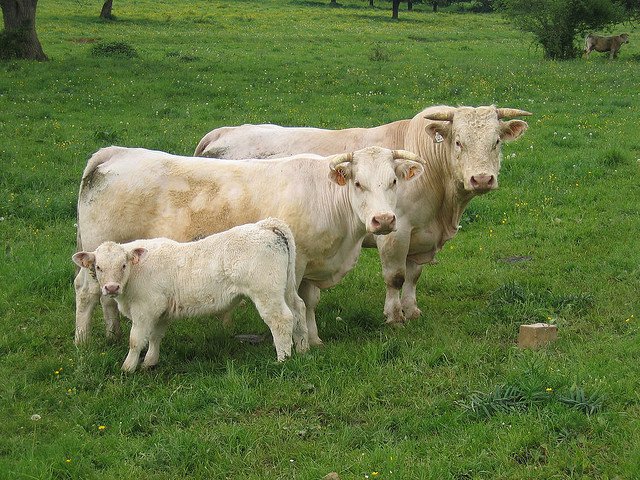
They shouldn’t suffer from birth to death. But that’s the life a lot of them have when born into factory farms.
Some meat producers are changing their models to adapt to public outrage over factory farms, but the vast majority of meat you encounter in restaurants and grocery stores are produced in grim conditions.
If you even cut meat out of one or two of your meals per week, you’ll be making a dent in this grim reality.
I’m not a vegan (although I try to avoid meat when I can), so I’m not casting judgement. Meat is at the core of a lot of diets. It plays a central role during breakfast, lunch, and dinner for many people.
It’s on the menu of nearly every restaurant. It’s everywhere in supermarkets. You can even toss a lot of meat products right into the microwave. It’s abundant, relatively cheap and satisfying.
But it’s putting a major strain on the planet especially as Western, meat-heavy diets are being adopted by emerging middle classes around the world. And it’s unhealthy. And the meat industry is all too often unethical.
Basically, the non-vegans out there (me included) should go vegan, or at least become more vegan than we already are.
It’s a journey everyone can become a part of--especially when the steaks--I mean stakes--are so high.
very interesting and useful one 👌👌
ReplyDeleteExcellent work q
ReplyDeleteA DETAILED RESEARCH INDEED !. AMAZING ..
ReplyDeleteGood work👍
ReplyDeleteGood work
ReplyDeleteGood work
ReplyDeleteVery Informative!!
ReplyDeleteWell done👍👍👍
Excellent presentation keep it up👍👍
ReplyDeleteGreat work
ReplyDeleteFantastic work , let's hope future is vegan
ReplyDeleteWell done...I think everyone should think about this
ReplyDeleteGreat work keep it up
ReplyDelete👏👏
ReplyDeleteBrilliant concept
ReplyDeleteAdiripoindhi
ReplyDeleteGreat work. Gonna try to become a vegan, mate :p
ReplyDeleteGreat work
ReplyDeleteNice one !!
ReplyDelete😎
ReplyDelete